Spanish Bay Is Getting Torn Up — And It Might Finally Become the Course It Was Meant to Be
When most golfers plan a trip to the Monterey Peninsula, Spanish Bay is the consolation round. You play Pebble Beach because it's the bucket list. You play Spyglass Hill because it's a beast. You play Spanish Bay because your tee time at the other two isn't until Thursday.
That's about to change.
On March 17, Pebble Beach Company will close The Links at Spanish Bay for a complete redesign led by Gil Hanse and Jim Wagner — arguably the most sought-after course architecture team working today. When it reopens in April 2027, it won't be the same course. Not a renovation. Not a "refresh." A fundamental rethinking of what Spanish Bay can be.
And honestly? It's overdue.
The Problem With Spanish Bay
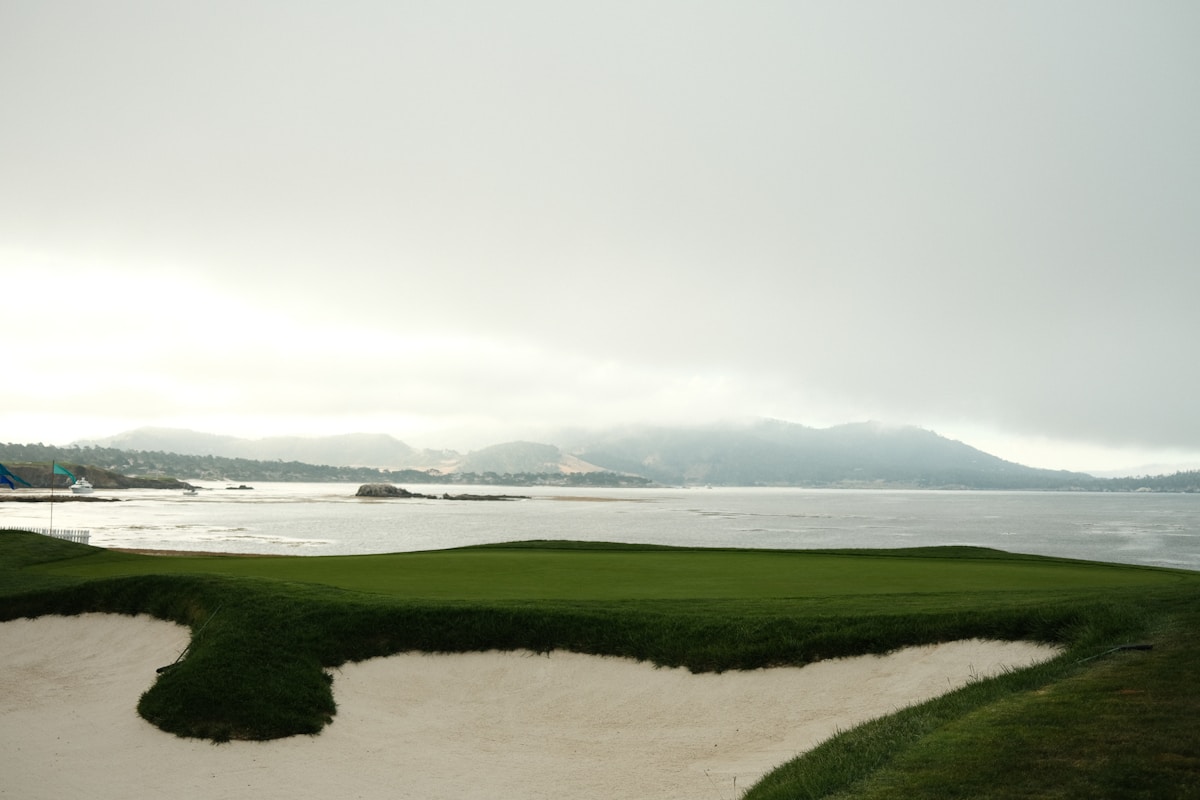
Let's be direct: Spanish Bay has always been the weakest link in the Pebble Beach portfolio. Not bad — the setting is spectacular, with Pacific surf crashing alongside several holes and sunset bagpipers sending you off the 18th — but the routing never fully capitalized on the land it sits on.
The original course opened in 1987, designed by an unusual trio: Robert Trent Jones Jr., Tom Watson, and Sandy Tatum, the former USGA president. The concept was admirable — build a true Scottish links course on the California coast. They imported sand, sculpted dunes and moguls, and tried to capture the feel of places like Dornoch and St Andrews.
The execution, though, always fell short of the ambition. Too many holes felt disconnected from the ocean they were supposedly celebrating. The greens were small relative to the approach angles. Several corridors felt cramped. And the par-72 routing had a few holes that felt like filler — competent but forgettable, which is a damning word for a course charging $300+ a round on the same stretch of coastline as Cypress Point and Pebble Beach Golf Links.
For decades, Spanish Bay survived on location and association. That's not nothing — the sunsets alone are worth the green fee — but for a course sitting on some of the most dramatic golf real estate on Earth, "fine" was never good enough.
Enter Hanse
If you're going to blow up a course and start over, Gil Hanse is the person you call. His firm's resume reads like a greatest-hits of modern course architecture: the Olympic Course in Rio, original masterworks like Ohoopee Match Club and CapRock Ranch, and restorations of America's crown jewels — Merion, Winged Foot, Oakmont, Los Angeles Country Club.
What makes Hanse the right fit for Spanish Bay specifically is his design philosophy. He and Wagner are minimalists in the truest sense. They don't impose designs on landscapes; they reveal what was always there. Wagner calls their guiding aesthetic "genteel neglect" — courses that blur into the native landscape, where you can't quite tell where the maintained turf ends and the wild terrain begins.
That's exactly what a links course on the Monterey Peninsula should feel like. The original Spanish Bay tried to import Scotland. Hanse's version will try to listen to California.
What's Actually Changing
The scope of this project is staggering. Here's what we know:
A new hole. The current 13th is being replaced by an entirely new par-3. The 14th and 18th greens are being relocated to accommodate the new routing. The course will play as a par-71 instead of par-72.
Forty percent more green space. Every green will be resurfaced and expanded significantly. This is huge. Larger greens with more internal contour mean more pin positions, more creative approach play, and more opportunity for the bump-and-run game that a links course should demand. The rough surrounding greens is being replaced with low-cut turf, which should create the kind of run-off and recovery options you see at genuine links courses.
Wider fairways, repositioned bunkers. The current corridors are being opened up, and fairway bunkers are being moved to create real strategic decisions off the tee rather than simple penal placement. This is classic Hanse — his courses ask "how should I best advance my ball?" rather than "will I find my ball?"
Completely rebuilt tees. Forward tees are being shortened by 500 yards across the course, while championship tees are being extended by 375 yards. That's a massive playability range, which should make the course genuinely enjoyable for a 25-handicapper while still testing touring professionals.
New drainage, irrigation, and environmental improvements. The redesign includes 12% less irrigated turf and three additional acres of environmental habitat. A more sustainable course that's also a better course — that's the goal.
Why This Matters Beyond Pebble Beach
This isn't just a story about one resort upgrading a golf course. It's a signal of where the entire industry is heading.
The best course architecture being done today emphasizes width over length, strategy over punishment, and ground game over aerial assault. Hanse's work at LACC for the 2023 U.S. Open proved that a course can be fiendishly difficult without being narrow. His restoration of Merion showed that a 6,800-yard course can still be a championship test if the design demands thought.
Spanish Bay has the raw ingredients — coastal terrain, ocean wind, sandy soil — but the 1987 design was built in an era that valued different things. Narrower was harder. Penal was challenging. Target golf was the default.
Hanse's redesign is essentially a course-architecture time machine: taking a course built during the era of penal design and rebuilding it with the strategic principles that the Golden Age architects — Mackenzie, Thomas, Tillinghast — would have used if they'd had this site.
The U.S. Open Connection
The timing isn't accidental. The 127th U.S. Open will be held at Pebble Beach Golf Links in 2027, and the reopened Spanish Bay needs to be ready for the wave of golf tourists that a major championship brings. Pebble Beach Company clearly wants every course in its portfolio operating at the highest level when the world's attention returns to the peninsula.
A transformed Spanish Bay gives Pebble Beach Resort a three-course lineup — Pebble, Spyglass, Spanish Bay — that could rival any multi-course destination in the world. Instead of the consolation round, Spanish Bay could become the course people talk about most.
What This Means If You're Planning a Trip
If you've been thinking about a Monterey Peninsula trip, here's the practical takeaway: book for late spring or summer 2027. You'll get the U.S. Open buzz at Pebble Beach, a newly opened Spanish Bay that will be in pristine condition, and the chance to play what might be the most ambitious course redesign of the decade before the rest of the golf world catches on.
Spanish Bay's green fees will almost certainly increase after the reopening, and tee times will be harder to get. The smart move is to book early.
And if you played the old Spanish Bay and thought "nice sunset, forgettable golf" — give it another chance. With Hanse and Wagner's fingerprints on every green, bunker, and fairway, the course that was always overshadowed by its neighbors might finally step into the light.
The bagpiper will still play at sunset. Everything else is about to get a whole lot better.